
A Quest for Well-Being Interview with
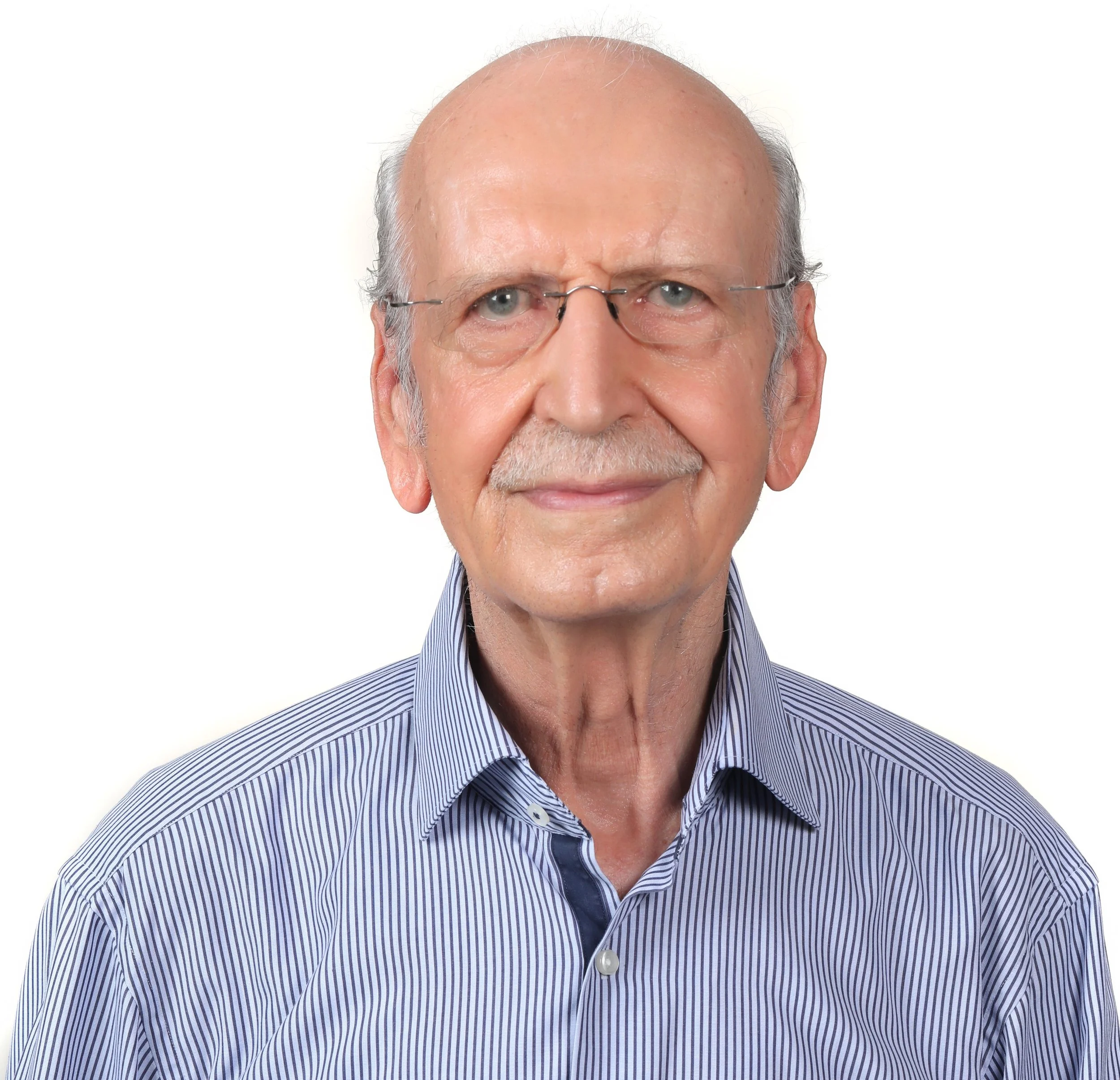
NASSIR SABAH
1. HOW WOULD YOU DESCRIBE WHO YOU ARE IN THIS VERY MOMENT?
I am a neuroscientist/biophysicist and Emeritus Professor of Electrical and Computer Engineering at the American University of Beirut, Lebanon.
2. WHAT MAKES YOU HAPPY AND WHAT MAKES YOU FEEL SUCCESSFUL?
What makes me most happy and deeply content is to imagine that I have been blessed in this worldly life by the mercy of God, which would lead to eternal bliss in the hereafter. This is unquestionably the greatest reward that one can possibly aspire to. I have come to recognize that the measure of real success in this life is the extent to which we have developed our conscious selves to become better human beings in all respects – spiritually, psychologically, morally, and intellectually. This self-development is a most worthy humanistic endeavor that gives meaning to life. It can be simply assessed by the answer to the question that one should ask oneself every day: “Am I a better person today than I was yesterday?” The answer to this question is the measure of real success in life.
3. WHAT INSPIRED YOU TO BECOME WHO YOU ARE AND TO DO WHAT YOU DO TODAY?
Ever since early adulthood, I had sought answers to existential questions about the purpose and meaning of life. I was very fortunate as an electrical engineering undergraduate in the UK to have a distinguished chairman of the department mentor a group of first-year students on a wide range of topics, particularly modern physics, cosmology, and biology, from an integrated scientific, engineering, and philosophical viewpoint. What made a lasting imprint on my impressionable teenager mind was that: (i) deep down there is an underlying unity to it all; boundaries are artificial (a favorite quote in this regard is one by Swami Vivekananda, “The whole universe is a play of unity in variety, and of variety in unity”), and (ii) therefore, one should not harbor a circumscribed worldview but should venture beyond the confines of particular tenets. That made me seek in earnest to broaden my horizon by reading about psychology (inasmuch as it sheds light on human nature), religion (inasmuch as it seeks to provide meaning and purpose to life), and philosophy (inasmuch as it applies rational thinking and logical reasoning to any thought process). Inevitably, this bred an awareness of what is beyond oneself and which transcends everyday concerns and preoccupations.
At a more practical level, I was fascinated by biophysics, as a confluence of two very basic sciences, and by bioengineering as the study of biological systems from an engineering viewpoint. For my PhD in the USA, I therefore chose biophysics/neuroscience as my major. I was even more fortunate to have as my PhD advisor a Nobel Laureate in Physiology or Medicine who was superbly erudite, particularly in science and philosophy, and who espoused a non-materialistic worldview that strongly underscored the spiritual aspects of the mind.
In my ensuing long academic career at the American University of Beirut, although I was mainly occupied with teaching, research, administrative, and service activities, I did, nevertheless, continue my search for answers to the existential questions about the purpose and meaning of life. By the time I formally retired to my Emeritus Professor status today, I had accumulated considerable knowledge and thought to be able to formulate definitive answers, from my perspective, to the existential questions.
Currently, I am preoccupied with research and writing about: (i) the science-based miraculousness of the Quran, and (ii) the spiritual message of the Quran and its implications for everyday human behavior, as explained in the answer to Question 11 below on the purpose of the human experience.
4. WHAT WAS THE INSPIRATION, INTENTION, AND PURPOSE OF WRITING YOUR BOOK AND WHERE CAN WE FIND IT?
I have written four technical books on electric circuits, electronics, and the human neuromuscular system, followed by my latest book on a completely different subject matter, Spirituality Rekindled: The Quest for Serenity and Self-Fulfillment.
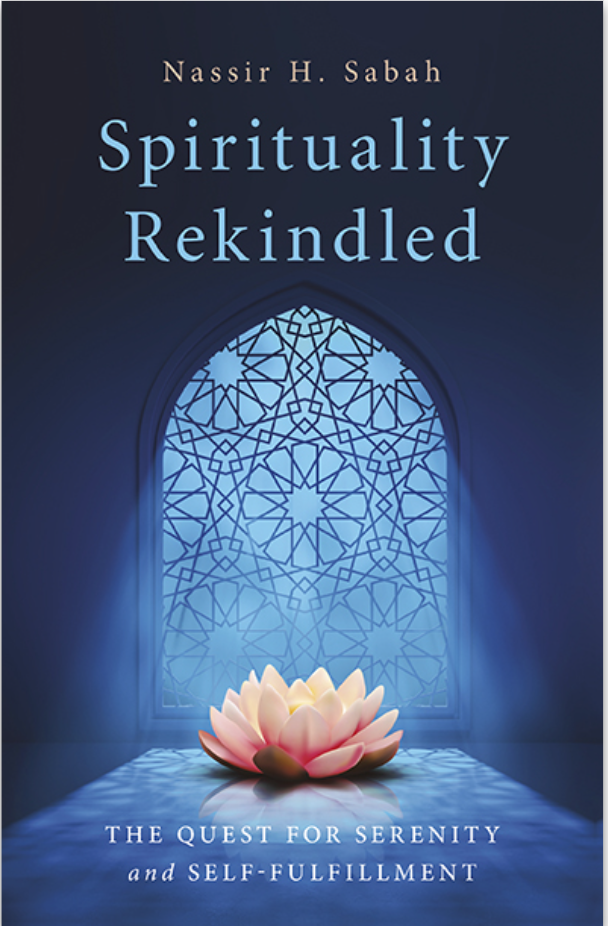
This book is about the attainment of serenity and self-fulfillment through a rational spirituality defined as the quality of being that is predicated on a sense of connectedness to God Almighty. Incontrovertible, science-based, and objective evidence for the existence of God is derived from the Quran. Based on this, and on cognizance of the limitations of present-day science, the case is made for a spirituality that provides the foundation for continuing, immensely beneficial, and comprehensive self-development – spiritually, psychologically, morally, and intellectually – driving toward a target state of sublime serenity and self-fulfillment. A detailed roadmap for this spirituality is presented. The book is available from Amazon and other booksellers, as indicated on the website https://nassirsabah.com. The website is continually updated with supplementary and complementary material related to the book’s message and topics.
I held some academically influential administrative positions at the American University of Beirut, such as the founding director of the Institute of Computer Studies and Dean of the Faculty of Engineering and Architecture for 13.5 years. These positions allowed me to introduce several academic programs that opened up new career paths for thousands of young men and women. That was highly gratifying, but it always left the nagging thought that it was not enough. Our students labored for four years preparing for their professional careers, but for what purpose in life? Is it to make money, live affluently – a luxurious house, expensive cars, fancy clothing, ostentatious lifestyle – achieve recognition and fame, be happy, raise a beautiful family, cherish social bonds of friendship and love, serve one’s community, or what? Most people set their own goals early in life and strive to pursue them, convinced of their worthiness. As a long-time educator, I felt I had to promulgate in simple language the answers that I found most persuasive and satisfying as to the purpose and meaning of life. The natural consequence of this urge was to write the book Spirituality Rekindled.
5. DO YOU CONSIDER WHAT YOU DO A CALLING, A PURPOSE, A MISSION?
As explained in the previous paragraph, I consider what I do my worthwhile duty as a long-time educator to make my message known as widely as possible. As always, I do my best under the circumstances and leave the rest to God.
6. WHO WOULD BENEFIT MOST FROM YOUR WORK AND YOUR MESSAGE?
Anyone who is seeking answers to existential questions about the purpose and meaning of life.
7. WHAT IS HEALING TO YOU?
I understand by healing the development of a state of holistic wellbeing, defined as a healthy and fulfilling state that encompasses the physical, psychological (i.e., mental and emotional), social, and spiritual aspects of human experience.
8. WHAT IS THE GOAL OF HEALING AND WHAT ARE THE OBSTACLES TO IT?
The ultimate goal of healing is the attainment of a state of serenity and self-fulfillment devoid of all forms of distress. Generally speaking, there are two obstacles to healing: (i) incorrect identification of the underlying causes of distress, or (ii) inadequate measures of alleviation of the distress.
9. WHAT ARE SOME OF THE MISCONCEPTIONS MOST PEOPLE HAVE ABOUT HEALING?
I believe the biggest misconception about healing is that it can be truly effective without invoking The Almighty, who is the omniscient (all-knowing) and omnipotent (all-powerful) Creator. This should be self-evident, for who would know a person better and have greater power over that person than He who created that person in the first place?
This is not to deny that some interventions, whether in the form of medical, psychotherapeutic, or so-called “psychic”, “spiritual”, or pseudoscientific practices, can be effective by all objective and subjective measures. But it must be borne in mind that all these “successful” interventions are only possible through His will and because of the knowledge that He has made available to humans out of His infinite loving-mercy. To believe that such interventions are of entirely human origin is but a manifestation of a high degree of human arrogance and self-delusion.
It must also be borne in mind that even the “most successful” healing is only temporary. It is bound to come to an end, if not fully in this life, then with death. But, according to a profound saying by the great Muslim scholar, mystic, and philosopher, Ibn ʿArabī who lived in the 12th and 13th centuries CE, “What does not last cannot be counted on”.
10. DO YOU CONNECT HEALING TO SPIRITUALITY? AND IF YOU DO, WHAT IS SPIRITUALITY TO YOU?
I most definitely do connect healing to spirituality.
Spirituality has different meanings to different people. A widely-held definition is: “spirituality is the quality of being that is predicated on a sense of connection to the supernatural, that is, to something greater than ourselves that is beyond explanation by natural laws.” In my understanding of spirituality, I identify the supernatural in this general definition with God Almighty, so my definition of spirituality is: “Spirituality is the quality of being that is predicated on a sense of connectedness to The Almighty, the creator of the universe and the guide and sustainer of everything in it”.

11. WHAT DO YOU FEEL IS THE PURPOSE OF THE HUMAN EXPERIENCE?
I would like to present here, in some detail, my science-based answer to this most important existential question. In the tree of life, and within the kingdom of animals, humans belong to the family of the great apes, the Hominidae, which includes four extant genera: (i) Pongo (orangutans), (ii) Gorilla (gorillas), (iii) Pan (chimpanzees and bonobos), and (iv) Homo (humans), which comprises several human species, the only extant species being our own species, Homo sapiens. Biologically, the closest to humans are the chimpanzees, believed to have evolved separately from a common ancestor with humans about 5 to 6 million years ago. The physical, anatomical, and physiological resemblance between humans and chimpanzees is quite striking. More remarkably, chimpanzees share at least 95% of the DNA of humans and have about half as many cells as humans in their cerebral cortices, which sit at the top of the hierarchy of the brain and are responsible for our higher mental functions. Chimpanzees also had at least as much time to evolve as humans, 5 to 6 million years.
Yet, chimpanzees today are still jungle inhabitants with only rudiments of culture. Homo sapiens have established advanced civilizations as they are endowed with astonishing mental capacities such as: the ability to probe into the mysteries of physical phenomena to make astounding scientific discoveries and technological developments; the intellectual prowess of imagination, abstract thinking, and logical reasoning; the creativity to produce indescribably beautiful works of art and the sense to appreciate the beauty in these works and in the universe at large; the propensity to discern good from evil, what is moral from what is not; the free will to at least try and shape our own lives; a mysterious, fathomless consciousness; the gift to form human bonds of faithful friendship and exquisite love; and last but not least, the spiritual dimension that is uniquely human. Why this indescribably immense disparity between humans and chimpanzees, despite the remarkable commonalities? This is a question that most people are oblivious to, and to which present-day science has no satisfactory answer.
According to fossil records, the human brain grew in size over a span of some two million years, despite its excessive energy demand, at the expense of other high-energy-consuming organs of the body, namely, muscle and intestines, but with very meagre returns in the form of some primitive tools such as pointed sticks and sharp stone. What was the drive for larger brains? No one really knows. Then, between about 70,000 and 30,000 years ago, Homo sapiens underwent a remarkable transformation that has been dubbed the “Paleolithic Cognitive Revolution”, or evolution’s “great leap forward”. As a result of developments in the brain and the rest of neuromuscular system, Homo sapiens acquired three crucial characteristics: (i) astonishing mental capacities, including imagination, abstract thinking, and advanced cognitive abilities, (ii) a highly-developed language that allowed effective expression of thoughts and the conveying of detailed information, and (iii) superb manual dexterity that enabled the making of useful tools and artefacts as well as various forms of inscription that promulgated knowledge and preserved it for future generations, which is essential for civilization.
The triad of creative imagination, highly developed language, and manual dexterity was a formidable combination that propelled Homo sapiens to unprecedented accomplishments. Some very useful implements were invented, such as bows and arrows that made hunting more efficient, oil lamps to combat darkness, fishhooks and harpoons for fishing, bone and ivory needles for stitching clothing, and boats to venture into open waters. Homo sapiens spread far and wide to all corners of the globe. Through planning, cunning, social skills, productive labor, and creative thinking, Homo sapiens prevailed over all other human and animal species to become, within a span of a few tens of thousands of years, the undisputed masters of planet Earth.
How did these extraordinary human characteristics come about, and why were they acquired only by Homo sapiens, to the exclusion of the other 700 million or so animal species that have inhabited Earth since its creation about 4.5 billion years ago? Present-day science has no definite answer. Materialistic scientists ascribe these human characteristics to genetic mutations driven by pure chance. However, the required transformations are so extensive and complex that their occurrence by chance is irrationally absurd. In fact, what are classically described as chance events, such as the tossing of a coin, are not intrinsically chancy at all, for the outcome of the tossing of a coin can, in principle, be correctly predicted if all the factors involved, such as the initial setting of the coin, the force applied, the air resistance encountered, etc., can be accurately accounted for, which is a daunting task. Hence, the event is ascribed to chance, and a probability of occurrence is estimated in accordance with probability theory, as a means of avoiding consideration of influencing factors that are difficult to account for, and bypassing unknown factors altogether.
Hence, the transformations that caused the distinctive characteristics of Homo sapiens are beyond explanation by present-day science. Is there any justification for considering the cause to be supernatural? This brings us to the Quran, which should be considered by non-Muslims as a stand-alone text that should be appraised on its own merits without prejudice or bias. The inevitable conclusion, without a shred of doubt, is that the Quran cannot possibly be of human origin, as evidenced by: (i) science-based miraculousness exemplified by the numerous verses that refer explicitly or implicitly to physical phenomena that were only observed or explained by science in modern times, and (ii) the large number of numerical patterns and relations, varied in nature, that have been uncovered so far. All this evidence cannot possibly be coincidental or of human origin. Numerous examples of the miraculousness of the Quran are presented in the book Spirituality Rekindled, which are continually updated and expanded on in articles on the website https://nassirsabah.com/Insights/Supplements.
It may be argued that the superhuman origin of the Quran could be attributed to an unknown supernatural agency, such as extraterrestrial aliens or similar entities. But the Quran plainly and repeatedly affirms that it was revealed by The One and Only God, the Creator of the Universe, whose proper name in Arabic is Allāh, and there have not been any rebuttals or counterclaims since the Quran was revealed more than 1400 years ago. The inescapable inference is that God exists and the present-day, original Arabic Quran is His unadulterated word. This being the case, it certainly behooves us to comprehend what the Quran says about the human condition.
According to the Quran, God, in His infinite loving-mercy, created humans to attain eternal bliss in Heaven, which is the purpose of life. This is the sublime expression of God’s loving-mercy towards humans and is the ultimate reward that one can aspire to. The bliss in Heaven is primarily spiritual, beyond human imagination, and incomparably more rewarding and everlasting than anything that can be attained in this worldly life.
Had God wished, He could have made all humans angel-like, full of goodness, and free from evil. But life would then have no meaning. In His omniscience and wisdom, God created humans with a wondrous conscious self having the propensity for righteousness and wickedness, free will, and astonishing mental capacities that allow them to receive His revelations, bear witness, through contemplation and scientific discovery, to His manifestations in the marvels of His creation, and to act as His agents-inheritors on Earth.
This worldly life, with its attendant evil and suffering, has therefore been made a trial for humans to follow the right path of serving God to receive His loving-mercy and attain eternal bliss in Heaven. God is served by obeying Him and by reflecting what can be humanly reflected from His glorious and perfect attributes, the most consequential of which is His loving-mercy. Humans should therefore conduct themselves virtuously towards all around them: other human beings, other forms of life, and the environment. Virtuous conduct is the outward manifestation of the self-development mentioned in the answer to Question 2 above on being happy and feeling successful, and which is grounded in the Spirituality defined in the answer to the preceding Question 10 on spirituality.
12. AT THIS TIME, WHAT IS THE WORLD’S GREATEST NEED?
The world’s greatest need is to combat the prevailing ethos in the world today, which is rampant materialism fueled by greed and excessive individualism. Materialism is the relentless pursuit of money as well as material possessions and objectives. The focus on materialism distorts values and blinds one’s worldview, making one oblivious to the ultimate purpose and meaning of our existence. It induces unethical or immoral behavior in the unscrupulous drive to achieve the materialistic goals that one has set. The ills of materialism are compounded by craving and greed. To crave material possessions and objectives is to become enslaved by this craving. Craving is incessant, driven by greed, so it’s never satisfied, becoming a source of endless anguish. What is craved cannot be really enjoyed, because no matter how much is attained, one is desperate for more.
Materialism is reinforced by excessive individualism, as the striving to possess and achieve one’s material objectives is principally self-centered and self-serving. Excessive individualism is a scourge that has broken family ties and social bonds, thereby obliterating our responsibilities to the welfare of the larger human community.
13. WHAT IS YOUR VISION FOR HUMANITY?
I would very much like people to understand the purpose and meaning of our existence, as outlined above, and to conduct themselves virtuously in the service of God.
14. WHAT DOES EMOTIONAL FREEDOM LOOK LIKE? AND HOW CAN YOUR WORK HELP?
Emotional freedom is not letting feelings and emotions of any kind control one’s thoughts and actions. Lack of emotional freedom is at the root of emotional stress and anxiety, which are the banes of modern life. It could also be detrimental to social relations when feelings are directed towards others.
There can be absolutely no doubt that the advocated Spirituality, as defined in the answer to Question 10 above on spirituality, is the best and most enduring way to attain real emotional freedom. First, it entails an attitude that is crucial for emotional freedom, as it involves “reliance on God” and “deference to His will” (see the article “Reliance on God and Deference to His Will” at https://nassirsabah.com/Presentations/Articles).
Reliance on God is expressed in Arabic by the word tawakkul, which has a very special meaning. Tawakkul does not mean indolent dependence on God, as just standing by and leaving matters to Him. On the contrary, it means always doing one’s best in any given situation but leaving the outcome to God and deferring to His will by accepting His decision on the outcome. Such an attitude reflects one’s confidence and trust in Him, which one should inevitably have.
This is a very powerful antidote to anxiety and stress over personal matters. For example, if one is applying for a job, then the anxiety and stress are not so much over preparing the job application or even being interviewed, but rather about the outcome of the whole process. If one covets the job but is rejected, one should not be disappointed, for it might be for one’s benefit in that a better job might be forthcoming.
With the advocated Spirituality one would not harbor negative feelings about others, such as envy or anger. When the measure of success in life is self-development in the service of God to gain His loving-mercy, there is no room for envying others over matters such as wealth, status, or other material achievements. If these are conducive to self-development, then good for them, and one would be motivated for more self-development. If, on the other hand, their perceived “success” is at the expense of self-development in the service of God, and is a test for them by God, for which they would face retribution in this life or the hereafter, then one would feel sorry for them instead of envying them.
Anger is a negative feeling that is also detrimental to the person experiencing it and to the relationship with others. With the advocated Spirituality, one would inherently be understanding, compassionate, and forgiving. Forgiveness is a balm to the psyche that elevates one to high moral ground, above the mundane concerns of this worldly life, in profound recognition of what is really important and what is vain and superfluous. Forgiveness is an act in the service of God, for it reflects what can be humanly reflected from His perfect attributes of all-forgiveness and ever-forgiveness.
In the final analysis, the best means of achieving emotional freedom and banishing all negative thinking and feelings, self-depreciation, or self-victimization is to have God as our everyday guide, refuge, and solace. What could be more effective than being fortified by the consummate feeling that one is being accorded the mercy, guidance, and care of He who is most compassionate, ever-merciful, all-powerful, all-knowing, all-wise, and all-just?

15. WHAT IS YOUR UNDERSTANDING OF LOVE?
Conventionally, love is understood to be a deep emotional attachment and an intense feeling of affection directed to someone. Ambrose Bierce cynically defined love as “Temporary insanity curable by marriage…”. Love strongly affects the person who loves. My favorite quotes in this regard are by: (i) Gabriel Garcia Marquez, “I love you not for who you are, but for who I am when I’m by your side.” And (ii) Lao Tzu, “Being deeply loved by someone gives you strength, while loving someone deeply gives you courage.” However, love can be passive and purely subjective, which is a rueful shortcoming. A much more meaningful and expressive word is Arabic raḥmah, which is usually translated as mercy. But mercy can be out of pity, whereas raḥmah combines mercy with love and entails action in being kind, gracious, gentle, forgiving, compassionate, and benevolent. Raḥmah is more properly translated as “loving-mercy”. I have distinguished between love and raḥmah as follows: “Love is the spring of goodness and beauty. Al-raḥmah, or ‘loving-mercy’, which is ‘love-in-action’, is what makes the spring gush forth and sprout life along its way.”
Raḥmah is so central a tenet in Islam that the two most consequential Exalted Names of the Divine occur right after the proper name Allāh in the very first verse of the Quran. This verse is also the most often repeated verse in the Quran and in the mandated daily prayers. These two Names are derivations of raḥmah: al-Raḥmān, which signifies intensity and extent of raḥmah, and al-Raḥīm, which signifies its constant repetition. A saying of Prophet Muhammad: “Have raḥmah on whoever is on Earth, you will receive raḥmah from He who is in the Heavens.”
16. IS WORLD PEACE POSSIBLE WITHOUT INDIVIDUAL INNER PEACE? PLEASE ELABORATE ON THE CONCEPT OF PEACE.
I presume that by “world peace” is meant peace between countries. Inner peace is a subjective feeling of mental and emotional calmness and contentment. If inner peace translates to outward peace as well, without a pernicious lust for money, power, influence, control, and manipulation of others, and if this peaceful attitude prevails in different societies, particularly among the decision makers in countries across the globe, then world peace can become a reality.
However, this is too Utopian and unrealistic. God created humans with a propensity for righteousness or wickedness and the free will to chart their own course in this worldly life, for which they would be held accountable and face retribution in the hereafter. At least statistically, there will always be deviant individuals with malicious intent and objectives. Unfortunately, such individuals often have the drive and abilities to gravitate to positions of power and influence and cause great harm to their societies, countries, and the world at large.
17. WHAT, WHERE AND WHO IS GOD TO YOU?
According to the Quran, “There is nothing like Him”, that is, the nature of God is beyond human imagination and comprehension. So, we can only think of God in terms of His manifestations and attributes. (See the article “How Should We Think About God?” on the website https://nassirsabah.com/Presentations/Articles.)
The manifestations of God are all over the universe, which He created and which he guides and sustains through the laws of nature that He ordained by His will and power, as well as by other means of which we are unaware. Nature and its laws are thus manifestations of God. He is, therefore, the most evident reality in Himself and also through whom everything else in the heavens and Earth is known.
In the Islamic tradition, God has 99 main attributes, referred to as “The Most Exalted Names”. God is transcendent, omnipotent, omniscient, not bound by space or time, the real owner of everything in the universe, the willer of all things that are, the doer of whatever He wills, the most compassionate, the ever-merciful, the all-forgiving, the ever-forgiving, the relenting, the responsive, the all-loving, the all-wise, the all-just, and much more. God is maximally perfect in every way. When one contemplates God’s manifestations and attributes, one cannot help but feel deep humility, considering His indescribable greatness, majesty, and glory.
18. WHAT IS CONSCIOUSNESS?
At its most basic level, consciousness is awareness of the environment and being able to respond to environmental stimuli. As such, consciousness is the substrate of mental activities that one is aware of in the normal state of being, for these mental activities cease when consciousness is lost. But even with partial loss of consciousness, an autonomic feeling such as pain and the response to it can persist. This level of consciousness exists in one form or another in all living organisms.
A higher level of consciousness is self-awareness, which children develop at about 1 to 1.5 years of age. When children of this age look in the mirror, they are aware that they’re seeing their own faces, hands, etc. This “mirror test” of self-awareness has been passed by some animals such as chimpanzees, elephants, dolphins, and magpies.
At a higher level is human consciousness, which makes us aware of the world around us and of ourselves in this world as individuals having our own subjective worldview based on our own opinions, attitudes, and past experiences. We have our own ideas, beliefs, thoughts, opinions, attitudes, desires, and hopes as we plan for the future. We have free will to choose between alternatives based on our motivation and drive, value system, circumstances, past experiences, and judgment. Consciousness influences our feelings: no two people experience physical pain in the same way, nor do they perceive smells and colors in the same way. It is this consciousness that provides the unity of being and continuity in time that defines each human being as a unique individual.
The Quran alludes to a still higher level of consciousness of the immortal self in the hereafter, particularly the selves of those destined for eternal bliss, which is in a form unimaginable by humans.
19. WHAT IS THE DIFFERENCE BETWEEN THE SUBCONSCIOUS AND THE UNCONSCIOUS MIND?
Conventionally, the subconscious holds thoughts, memories, and learned skills that are just outside immediate awareness but can be brought to consciousness by focused attention. On the other hand, the unconscious is the store of deeply repressed fears, traumatic memories, and primitive urges, remaining largely inaccessible to conscious thought, but it can, nevertheless, exert a powerful influence on behavior.
20. WHAT DO YOU DO FEEL IS THE NATURE OF OUR INNATE DESIRE FOR HUMAN CONNECTION AND SPIRITUAL TRUTH?
Conventionally, it is believed that this innate desire is somehow “wired in” into our DNA and is somehow incorporated in the structure and operation of our brains. Another viewpoint that has been largely neglected in mainstream science is that our brains do not operate independently of some “external influences” whose nature is presently unknown.
In this regard, an illustrative analogy of the brain to a television (TV) set is made. A person who is unfamiliar with broadcasting and the generation, propagation, and reception of electromagnetic waves (like someone suddenly resurrected from a past era) would reasonably assume that what is seen on a TV screen is generated in the TV set itself. This view is supported by the fact that any tinkering with the components of the TV set will generally affect the image on the screen or might obliterate it. But in fact, the TV set is just tuning to an outside signal and is merely processing this signal into a form that can be perceived by the viewer. Similarly, brains may not be operating all by themselves but may be tuning to something external and are merely processing or filtering this “something”.
Suggestions as to what this “something” might be are the morphic fields of biologist Rupert Sheldrake and the implicate order of theoretical physicist David Bohm.
21. IS THE AUTHENTIC SELF OR THE TRUE SELF, THE SPIRITUAL SELF?
I believe individuals have only one self, the conscious self that is the essence of being human and which defines every human being as a unique individual. The conscious self, or simply self, is one of three entities that constitute a human, the other two being the body and the spirit, the latter being the essence of life. The word “soul” is ambiguous, as it can mean either the spirit or the self. According to the Quran, the self transcends the physical death of the body; the spirit is from the command of Allāh and is unknown to humans.
The body, self, and spirit have been compared to a car. The material parts of the car are analogous to the human body. The ignited fuel (or the charge in the batteries in the case of an electric car) that “brings the car to life” and makes it move is analogous to the spirit. To be useful, the car must be acted on purposefully – moved forward or backward, turned right or left, accelerated or decelerated, or driven to some destination. The driving agency, which may be a human driver or some form of autonomous or remote control, is analogous to the conscious self.
The self is associated with the mind, whose activity that one is aware of can be considered to have four aspects: cognition, feelings, consciousness, and spirituality. Although distinguishable from one another, these mental activities overlap and interact within the same individual. For example, feelings can interfere with reasoning and judgement, which are part of cognition. Spirituality, as defined in the answer to Question 10 above, is unique to humans. It requires consciousness and cognition and involves feeling, yet it is of a very particular nature, which justifies considering it a distinct mental activity, in that it involves a belief in the existence of the supernatural, as something greater than ourselves and beyond explanation by natural laws, and a sense of connectedness to the supernatural. In addition, spirituality is associated with more sublime feelings that transcend the mundane affairs of everyday life. The fact that many people do have spiritual experiences means that humans can have them. Most people don’t have them simply because they are conditioned to repress their spirituality, consciously or unconsciously, under social, educational, and cultural influences that relegate spirituality to the realm of superstition and label it as naïve, unsophisticated, and unscientific. Nevertheless, in moments of introspection, the “primordial spiritual drive” can surface as a feeling of inner void that cries to be filled by connecting with something outside ourselves in search of meaning and purpose to our existence.
22. HOW DO WE RECOGNIZE WHEN BODY AND MIND ARE ALIGNED WITH OUR TRUE SELF?
Full harmony is realized in the serene self that is at peace with itself and the world. The serene self is transparent, having nothing to hide. It has shed all vestiges of vain and mundane desires, is free from all trepidation and fear of any mortal or any worldly outcome, harbors no ill feelings towards anyone, is compassionate to all, and is preoccupied with benevolent and virtuous acts. It has certainty as to what is right and what is wrong, profound knowledge of what is paramount and worthy and what is not, and perspicacious wisdom concerning the right decisions to make, and courses of action to take, in any given situation. It experiences sublime spirituality, submitting to the will of God and serving Him, content with what it has achieved by His mercy, and has pleased Him with its achievement. The serene self is destined to eternal bliss in the hereafter.
23. ULTIMATELY, WHAT IS FREEDOM TO YOU?
Freedom is emotional freedom and freedom from all fear, anxiety, apprehension, and negative feelings, as well as being in a position to do and say what one believes to be most conducive to serving God to gain His loving-mercy. Freedom is best achieved by reliance on God and deference to His will, as explained in the answer to Question 14 above on emotional freedom.
A most hallowed phrase of the Quran, that is often repeated by pious Muslims in wonderment and invocation of His loving-mercy, is: “There is no god but Allāh”. Apart from its evident meaning that there is but a One and Only God of the universe, the phrase has two other profound meanings that are truly liberating.
The first is that only Allāh should be worshipped, that is, idolized and made the center of our devotion and attention. Nowadays, polytheism prevails in different forms, as many people do in fact worship, in this sense of the word, other gods, such as money, power, and status, their own egos and self-interests, or other worldly and materialistic pursuits.
The second meaning is that in opposing all forms of evil, one should fear only Allāh and not anything or anyone. All pious believers are commanded to oppose evil to the best of their ability, where evil includes all forms of injustice, oppression, exploitation, and corruption.
24. IF LIFE HAD ONE PURPOSE, ONE PURPOSE ONLY, WHAT WOULD THAT BE?
With reference to the answer to Question 11 above on the purpose of the human experience, I believe that the purpose of this worldly life is continual, comprehensive, and fulfilling self-development in the service of God to gain His loving-mercy and attain eternal bliss in the hereafter.
25. WHAT EXPERIENCES YOU WISH EVERYONE TO HAVE BEFORE THEY DIE?
My answer to this question may surprise most people. I wish everyone to experience JOY up to and including the time of death. This is not a personal point of view but is at the core of Islamic piety, as illustrated by the following verses that are attributed to the fourth Caliph and cousin of the Prophet Muhammad:
“Your mother gave birth to you, son of Adam, crying while people around you were laughing with pleasure.
Hence, perform your daily acts to the satisfaction of Allāh, so that when they cry on the day of your death, you will be rejoicing in laughter.”
Evidently, this is a very different view of death from what most people have. A similar attitude to death is expressed by a famous Islamic commander who referred to his army in his address to the kings of Persia as “…people who love death as much as you love life” (See the article “What Death Means to a Pious Muslim” on the website https://nassirsabah.com/Presentations/Articles.)
Death is viewed by a pious Muslim simply as a transition between a worldly life of finite duration that is but a test for humans, and a life of eternal bliss for those who understood the nature of this test and have done well in it. The fate of the physical body is of no concern.
BIO
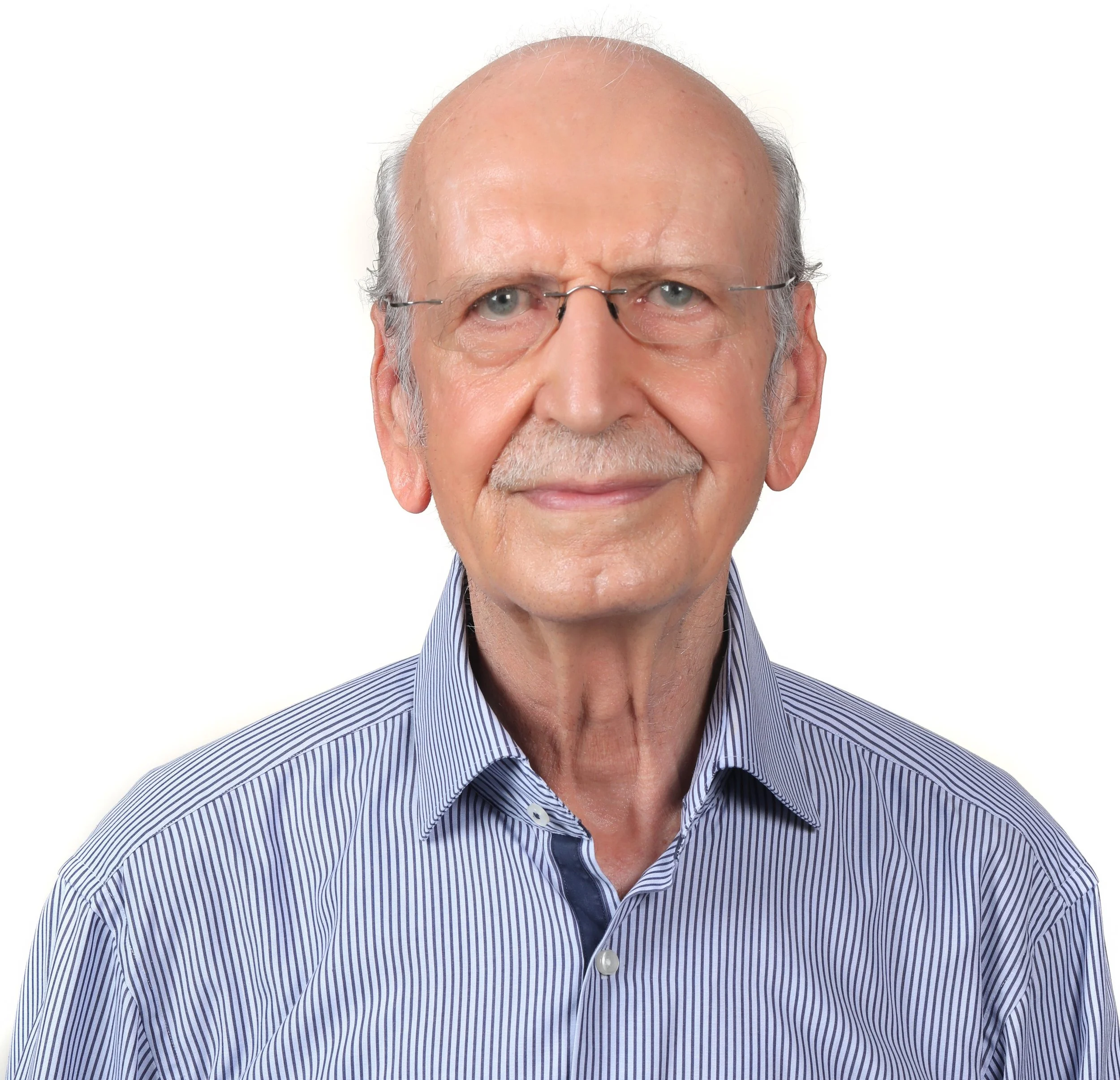
NASSIR SABAH is a biophysicist/neuroscientist and Emeritus Professor, Electrical and Computer Engineering Department, American University of Beirut, Lebanon. He received his B.Sc. (Hons. Class I) and his M.Sc. in Electrical Engineering from the University of Birmingham, U.K., and his Ph.D. in Biophysical Sciences from the State University of New York at Buffalo (SUNY/Buffalo). His Ph.D. advisor was Sir John C. Eccles, Nobel Laureate in Physiology or Medicine. He spent a sabbatical year (1999-2000) with the Division of Bioengineering and Environmental Health and the Whitehead Institute for Biomedical Research at the Massachusetts Institute of Technology, Cambridge, MA, USA. He is a Fellow of the Institution of Engineering and Technology, U.K.
Professor Sabah has held several administrative positions at the American University of Beirut, as Chairman of the Electrical Engineering Department, founding Director of the Institute of Computer Studies, and Dean of the Faculty of Engineering and Architecture from January 1986 through June 1999. He has more than 45 years of teaching experience, mainly in neuroengineering, biomedical engineering, electronics, and electric circuits. His research interests are in the modeling, simulation, and computation in the nervous system. He has over 100 technical publications, mainly in neurophysiology, biophysics, and biomedical instrumentation. He has authored four technical books on electric circuits, electronics, and neuroscience, published by CRC Press, the most recent being Neuromuscular Fundamentals: How Our Musculature is Controlled (CRC Press, Boca Raton, FL, 2021, 574 pp.). His latest book is Spirituality Rekindled: The Quest for Serenity and Self-Fulfillment, Obooks, Winchester (UK) and Washington (USA), 2023, 349 pp.
Since his college years, Professor Sabah has been keenly interested in matters of spirituality, philosophy, and religion. He has done considerable reading and research on these topics and has occasionally given public lectures on issues related to spirituality and the mind-brain problem. He has a website, https://nassirsabah.com, related to the topics of his book on spirituality.

